Your Forgotten TV host was raised on UHF reruns of shows like Star Trek and The Twilight Zone on a black-and-white, roll-around (“Now we can watch Jackie Gleason while we eat!”) 19-inch Admiral television — long before the average household had home video, back when if you missed a show… you missed it.
Even as a kid, I seemed to have an early fascination with media production. When I got a Panasonic cassette recorder, I immediately started recording TV theme songs on it… along with my own “announcements.” Writing an anti-littering radio PSA for a school contest in sixth grade led to my first produced audio work: the local radio personality judging the contest came to the school to record me voicing the winning spot, which then aired on Houston radio for years.
Not wanting to miss any episodes of favorite shows led me to create homemade episode guides for The Greatest American Hero during its original run, and later for reruns of Wonder Woman and Battlestar Galactica. Long before the internet made entertainment news instantly accessible, the Sunday newspaper TV listings were a weekly event.
Some of my strongest memories involve the mystery surrounding television itself: opening the listings in January 1980 and seeing Battlestar Galactica Finds Earth scheduled for that night (an incorrect title for Galactica 1980), or spotting a mysterious half-hour listing for a show called Star Tracks and trying to determine whether it was a new sci-fi series, a newspaper misprint, or some strange half-hour reformatting of Star Trek.
Finding a copy of Vincent Terrace’s Television 1970-1980 at a used bookstore was like discovering buried treasure. Airdates! Writers! Synopses! I started carrying it around for reference. (What teenage boy does this??) There inside was Galactica 1980, along with shows I had somehow missed entirely, like Hello, Larry and Me and Maxx. To most people, short-lived TV series were passing curiosities. To me, they were clues in some larger puzzle.
That mindset eventually evolved into what I now call “TV archaeology.”
My first job was at a movie theater, where by age 18 I had become “the voice of the theater,” recording the call-in movie listings, making in-house announcements, and eventually producing the theater’s local radio spots before later working at local radio stations in the early 1990s.
Ironically, one of the shows that would later become central to Forgotten TV (The Popcorn Kid) featured a main character whose job mirrored my own. In many ways, that short-lived 1987 series became the emotional origin point for everything that followed.
Today, I produce Forgotten TV from what I refer to as the “Studio of Solitude” — an enclosed, dedicated production space that evolved from the humble early days of recording episodes in the laundry room with computer fan audible in the background. Produced with an increasingly ambitious documentary approach, the podcast blends archival research, oral histories, reconstructed material, immersive sound design, and deep production analysis into longform explorations of television history from the 1970s and 1980s.
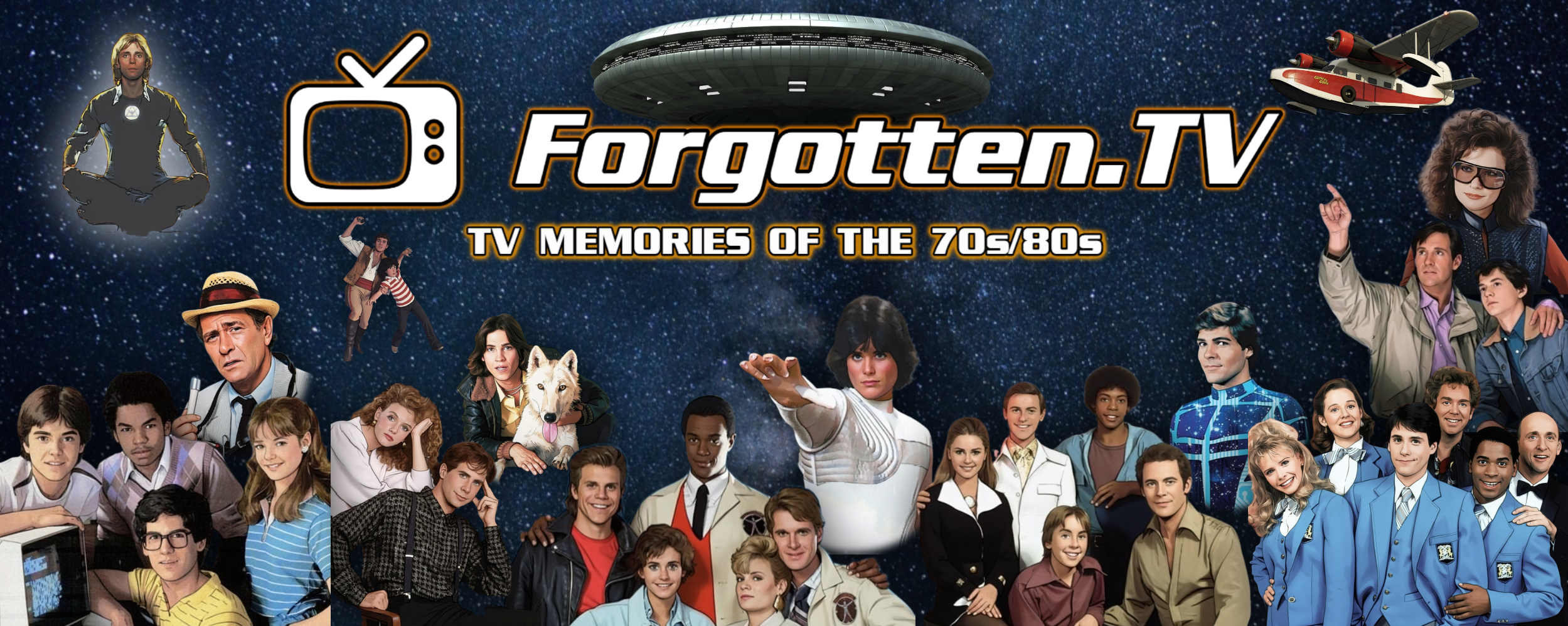
Approaching its tenth anniversary in March 2027, Forgotten TV has become a respected authority on obscure and short-lived television from the era, with extensive coverage of series such as Whiz Kids, Automan, Tales of the Gold Monkey, The Phoenix, Street Hawk, James at 15, Misfits of Science, and many others. Some episodes have even been described as “definitive documentaries” on the shows in question — including by the producers themselves.
Whenever possible, I work from original sources rather than repeated internet lore — consulting production paperwork, scripts, archival documents, contemporaneous reporting, and even first-hand interviews with the people who actually made the programs. Like any archaeological process, the deeper the excavation goes, the more myths tend to collapse. As a result, some findings occasionally differ from long-accepted information repeated online, on IMDb or Wikipedia, or even in official DVD documentaries.
Over the course of the series, I’ve conducted extensive interviews with actors, writers, producers, musicians, and other industry professionals connected to the shows being explored, including Ernie Hudson, Andrea Elson (ALF, Whiz Kids), Todd Porter (Whiz Kids), Bill Ewing, Charles Morteo, and Janelle Pransky (Korg: 70,000 B.C.), producers Tom Greene (Tales of the Gold Monkey, Knight Rider) and Bob Shayne (Whiz Kids, Simon & Simon), writers Alan Eisenstock and Larry Mintz (Angie, Family Matters, Step by Step), author and producer Dan Wakefield (James at 15), and musician Billy Hinsche (in one of his final interviews) best known from Dino, Desi & Billy and as longtime keyboardist for The Beach Boys, but known here as the composer of the Automan theme.
What began as a fit of mid-life nostalgia has increasingly become a preservation effort.
Because television once disappeared all the time.
And sometimes…they just didn’t get it.
But maybe you will.
Please support Forgotten TV through Patreon, Paypal, or Buy Me A Coffee.